Connected cracks spreading across a drive lane in a pattern of small cells often look like a surface problem that a fresh coat of sealer can cover. Within a season, the same cracks return wider and deeper than before, and loose pieces start breaking away near entrances, loading zones, and dumpster pads. That pattern is asphalt alligator cracking, and the real damage usually starts well below the surface.
Alligator cracking is a fatigue failure, which means the pavement bends under repeated traffic loads that its base or thickness cannot support. Water in the layers below speeds up the damage, while aging asphalt and poor construction add to the problem. If you leave it unrepaired, the cracked area keeps spreading and turns into potholes that raise repair costs and safety risks. Avoiding that outcome starts with finding the exact cause, since the cause decides which repair will hold.
What Asphalt Alligator Cracking Looks Like
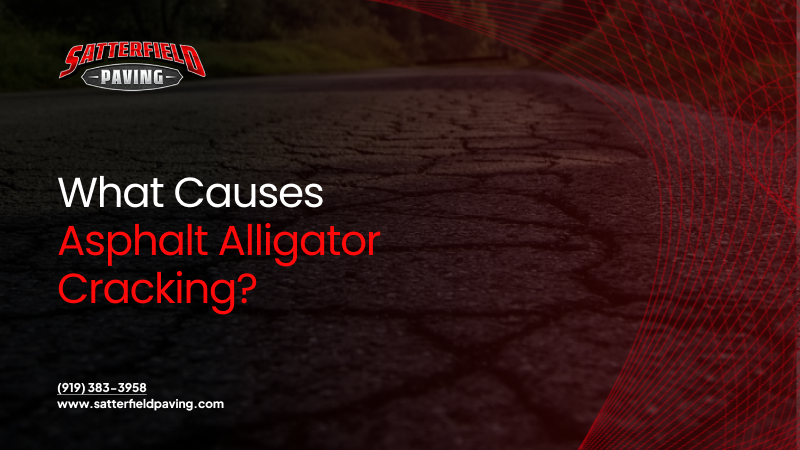
Alligator cracking appears as a web of connected cracks that divide the pavement into small, many-sided pieces, usually no larger than a foot across. The pattern often starts as a few parallel cracks along the wheel paths, where tires press the same strip of pavement again and again. Over time, those lines link up and form the scaly pattern that gives the damage its name.
Property owners can spot alligator cracking during a walk around the lot by checking for these signs:
- Cracks that connect into a scaly, cell-like pattern
- Damage focused in drive lanes, entrances, and truck routes
- Chipped or crumbling edges along the cracks
- Slight dips where water collects after rain
- Loose pieces or small potholes inside the cracked area
This cracking signals a structural problem, since the layers beneath the surface can no longer carry the load. Block cracking looks similar at first glance, yet its rectangles are much larger, often several feet wide, and they form from asphalt shrinking with age instead of from traffic. Telling the two apart is the first step toward the right repair.
7 Major Causes of Asphalt Alligator Cracking
Most asphalt alligator cracking traces back to heavy loads, weak support, or water working on the pavement over time. These causes rarely act alone, and two or three of them usually combine in the same damaged area.
1. Repeated Heavy Traffic Loads
Asphalt flexes slightly under any vehicle and then returns to its original position. Heavy trucks bend the pavement much further, and after thousands of these cycles, tiny cracks form at the bottom of the asphalt layer and slowly work their way to the surface. Engineers call this process fatigue, the same effect that makes a metal wire snap after it bends back and forth many times.
Truck weight matters far more than the number of trucks. A typical refuse vehicle can have the equivalent impact to a street of over 9,000 sport utility vehicles, which is why dumpster pads, delivery lanes, and loading zones often crack first. Tight turning areas add twisting forces that speed up the damage.
2. Weak or Poorly Compacted Base
The stone base under the asphalt carries most of the load, and any weakness there shows up on the surface. Base problems that lead to alligator cracking include:
- Stone base layers built too thin for the traffic
- Poor compaction during construction
- Fill mixed with dirt, clay, or debris
- Soft spots left from old trenches or utility work
Weak base material lets the asphalt flex more with passing vehicles. Once that extra movement starts, cracks form much sooner than the pavement design intended.
3. Soft Subgrade and Piedmont Clay Soils
The subgrade is the native soil beneath the base, and across the North Carolina Piedmont that soil is often dense red clay. Clay stays firm when dry but loses much of its strength once it becomes wet, and it can shift as moisture levels change through the seasons.
Pavement built over poorly prepared clay has less support during rainy periods, which leaves it more likely to bend and crack under trucks. Proper compaction, a strong stone base, and effective drainage help keep the clay drier and more stable, giving the asphalt above steady support year-round.
4. Water Infiltration and Poor Drainage
Water is the most common trigger that turns minor wear into alligator cracking. The damage usually follows a clear sequence:
- Rain enters small cracks or seeps in from low spots and pavement edges.
- The water soaks into the base and subgrade and softens them.
- The softened layers let the pavement flex more under traffic.
- New cracks form and connect into the alligator pattern.
- Loose pieces break out, and potholes develop.
Saturated pavement wears out much faster under the same traffic, since water-logged layers lose the strength they need to carry heavy vehicles. After Hurricane Katrina left New Orleans roads underwater for weeks, testing on one highway found structural damage equivalent to 3 inches of asphalt concrete, with the soil beneath the pavement left very weak.
5. Asphalt Too Thin for Its Traffic
Many parking lots are paved at one thickness from end to end, even though the traffic they carry changes from one area to the next. In the parking stalls, passenger cars pull in and stay for hours, which puts little repeated stress on the asphalt.
Drive lanes, entrances, and loading zones carry delivery trucks, buses, and waste haulers on that same thin section, and those areas reach their fatigue limit years before the rest of the lot. Designing heavier sections for truck routes prevents much of this cracking from the start.
6. Aging and Oxidation of the Asphalt Binder
Sunlight and air slowly harden the asphalt binder, the sticky material that holds the stones together. As the binder dries out, the pavement loses its flexibility and cracks under loads it once handled well.
Older pavement without regular sealcoating becomes brittle sooner, which makes fatigue cracking more likely. Sealcoating every two to three years slows this process by shielding the binder from sun and water, helping the pavement stay flexible for longer.
7. Poor Construction and Past Repairs
Some alligator cracking starts with decisions made during paving or earlier repairs:
- Thin skin patches placed over a failed base
- Overlays laid over cracking that was never repaired
- Asphalt placed too cold or rolled poorly
- Mix with too little binder to hold together
- Pavement edges left without curbs or firm shoulders
These issues explain why some lots crack only a few years after paving or repair. Finding them early helps owners avoid paying for the same fix twice.
Crack Location and What It Reveals About the Cause
The location of the cracking often points straight to its cause. Use these patterns as a guide during a walk around the lot:
- Cracks along wheel paths and drive lanes usually point to heavy loads or pavement that is too thin.
- Cracking in low spots or near storm drains suggests water is weakening the base.
- Damage along pavement edges points to missing edge support.
- Cracks around old patches signal an earlier repair that did not address the cause.
- Cracking at dumpster pads and loading docks reflects concentrated truck loads.
Several patterns in one lot usually mean more than one cause is at work. A professional inspection confirms the cause by checking the base, the subgrade, and the drainage in the damaged areas.
Severity Levels of Alligator Cracking
Asphalt alligator cracking develops in stages, and the stage decides the urgency of the repair. Most pavement inspections group it into three severity levels.
Low Severity
Low severity cracking appears as fine, connected hairline cracks with no loose pieces and little or no breaking along the crack edges. The pattern may cover only a small area along a wheel path. Damage at this stage is still structural, yet the repair area stays small and far less costly.
Medium Severity
Medium severity cracking shows a clear pattern that drivers and pedestrians can spot easily. Common signs at this stage include:
- Cracks wide enough to see from standing height
- A complete cell pattern across the damaged area
- Light chipping along the crack edges
- Slight dips where water collects after rain
Water reaches the base much faster at this stage. Repairs planned now usually stay limited to the damaged section.
High Severity
High severity cracking has loose or missing pieces, sunken areas, and water that pumps up through the cracks when vehicles pass. Potholes can form quickly at this stage, creating trip hazards and damage to vehicles.
Pavement condition also falls faster as damage builds. Over the first 75% of its life, pavement condition drops by about 40%, yet it takes only another 17% of its life to drop another 40%. That rapid decline makes prompt repair the most cost-effective choice once cracking reaches this level.
Why the Cause Decides the Repair
Alligator cracking will return after any repair that ignores its cause. Surface treatments seal out water for a while, yet they add no strength to a failed base. Matching the repair to the cause is what makes the fix last.
The most common pairings are:
- Crack sealing and sealcoating protect early, separate cracks but cannot fix alligator cracking.
- Full-depth patching removes the failed asphalt and base and rebuilds the area.
- Drainage correction fixes low spots, clogged drains, and grading that trap water.
- Milling and overlay renews the surface once the base below is sound.
- Thicker sections or reconstruction suit areas where trucks overload the original design.
Many lots need two or more of these steps in the same project. Fixing the drainage before patching keeps the new base dry and stable, which is why the order of the work matters as much as the repair itself. Choosing the right steps in the right order starts with a close look at the damaged area. Send us photos of the cracked pavement or share its location on your property, and our team at Satterfield Paving will inspect the base and drainage before recommending a repair plan.
Can you pave over alligator cracks?
No, an overlay placed directly over alligator cracking usually shows the same pattern again within a few years. The failed base needs full-depth repair first, and only then can new asphalt bond and perform as designed.
Is alligator cracking a serious problem?
Yes, alligator cracking signals structural failure in the pavement layers below the surface. Left alone, the cracks let in more water, break into loose pieces, and raise liability risks from trip hazards and vehicle damage.
Takeaway
Asphalt alligator cracking is a clear warning that the pavement structure has reached its limit, most often from heavy loads, a weak base, trapped water, aging asphalt, or shortcuts made during earlier work. Fortunately, the cracks themselves offer useful clues. Their location and severity point to the cause, and once the cause is clear, the right repair follows. Acting early keeps the damaged area small, leading to a faster repair, a lower bill, and a safer lot for drivers and pedestrians. All of that starts with an accurate diagnosis.
That diagnosis comes first on all of our repair projects at Satterfield Paving. As a licensed commercial paving company, we check the base, subgrade, and drainage beneath the cracked area before recommending a fix. Our crews handle asphalt repair, drainage work, crack filling, and milling and overlay, which lets us address both the cause and the surface in one coordinated project. We serve commercial properties across North Carolina, South Carolina, and Virginia from our Durham headquarters.
Get in touch with us to schedule an inspection and stop alligator cracking before it spreads across your lot.